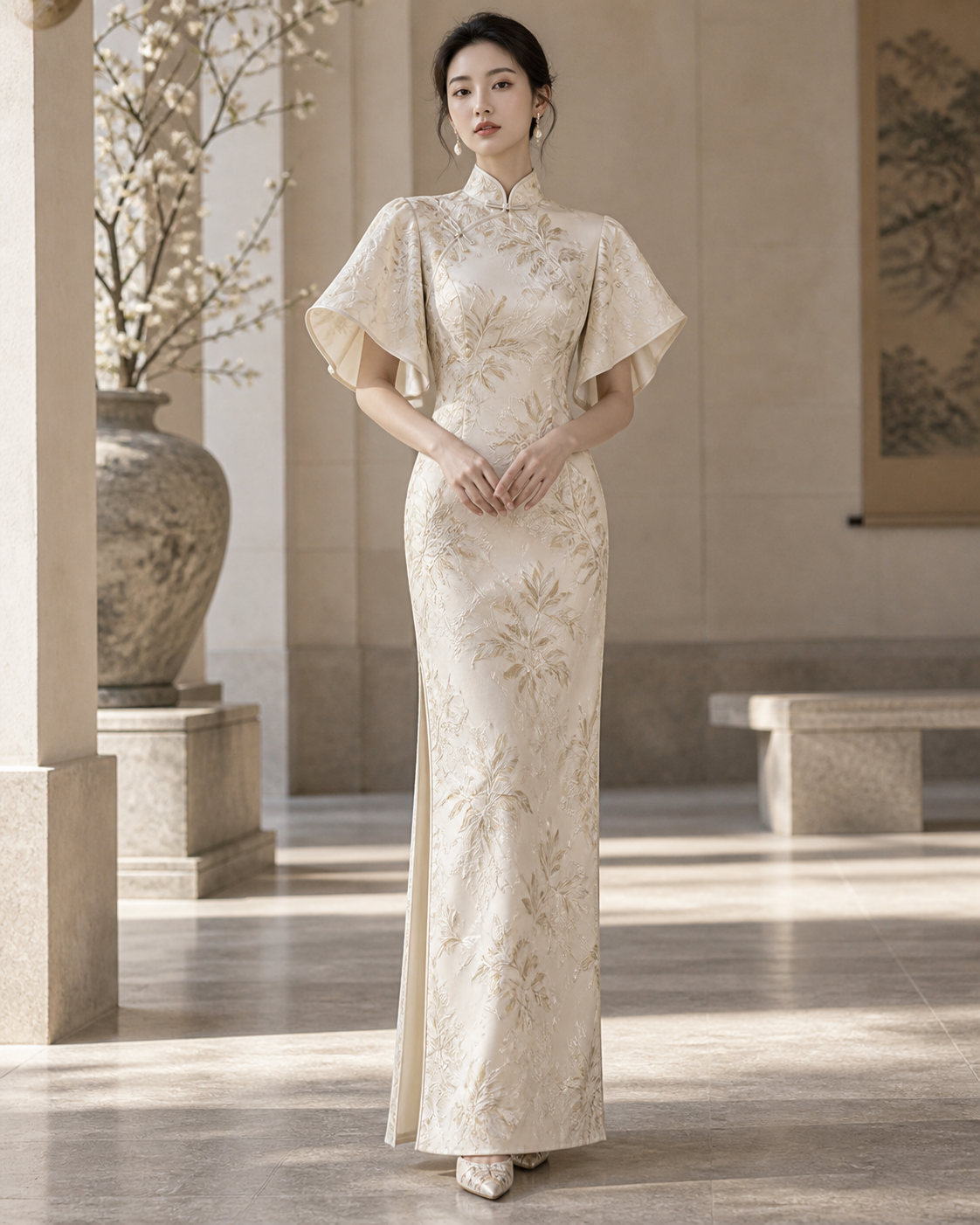
The best fabric for a custom qipao depends on how the garment will be worn, maintained and sold. Silk, brocade, satin and velvet can all create a strong visual result, but they perform differently during sampling, production and everyday use. This guide helps buyers match material choice to the product application.
Start with use, not with a fabric name
Many qipao projects begin with a requested material: “silk,” “satin” or “brocade.” Those terms are a useful starting point, but they do not answer the full production question. A bridal gown may need a rich surface, controlled structure and a formal hand feel. A boutique capsule may need drape and photo impact. A hospitality uniform may need color consistency, manageable care and comfort through a long shift.
Before choosing a fabric, define the garment’s product application. Consider climate, frequency of wear, desired care method, lining, decoration, size range and target price position. The right material is one that supports the visual direction while also working with the pattern and operational requirements.
Five questions for a fabric brief
- Will the garment be occasionwear, a retail product or a repeat-wear uniform?
- Does the customer expect natural fiber, easy care, stretch or a specific surface texture?
- Will embroidery, beading, piping or a highly shaped collar be used?
- How important are opacity, weight and drape in the finished silhouette?
- Does the project need consistent reordering in the same color or material?
Silk: natural drape and a premium hand feel
Silk is valued for its smooth hand, light response and fluid drape. In a qipao, it can make a close-fitting silhouette feel refined rather than stiff. However, “silk” covers different constructions and weights. A lightweight silk may behave beautifully in a fluid dress but require careful lining or support. A heavier silk blend can offer more body around a collar and side opening.
For buyers, the important approvals are composition, weight, weave, shade and care expectation. Ask to see the actual fabric under normal light and, when color is critical, approve a swatch or lab dip. Silk can be appropriate for bridal, evening and premium retail, but care requirements should be communicated honestly to the end customer.
When silk is a strong option
- Premium occasionwear where drape, luster and tactile quality are central to the product story.
- Editorial or boutique collections with a controlled care expectation.
- Designs where embroidery and piping are tested carefully on the selected silk construction.
Brocade and jacquard: structure and visual depth
Brocade and jacquard materials create pattern through the weave rather than only through a surface print. They can add depth and ceremonial presence to a qipao, especially in bridal, festive and formal applications. Because the pattern repeat, texture and weight affect the silhouette, they should be reviewed with the pattern in mind.
A large motif may need careful placement across the front, side seam and back. A very stiff construction can make a slim silhouette feel restrictive if the pattern or lining is not adjusted. During sample review, check whether the fabric supports the intended collar, whether the motif alignment is balanced, and whether seam areas look clean rather than bulky.
For decorative materials, factory testing often focuses on practical construction questions: does the fabric fray at the seam allowance, does it press cleanly, does the motif shift at the side opening, and does the selected piping create unnecessary thickness? Those details determine whether a visually rich material can be repeated consistently in bulk.
Satin: controlled sheen with many specification options
Satin describes a weave structure rather than one fiber. It may be silk, polyester, acetate or a blend. This matters because the fiber content changes the hand feel, cost, care and behavior under tension. A satin can offer a polished surface and clean color, making it useful for contemporary qipao and uniform directions, but the exact construction should be confirmed rather than assumed.
In a qipao, a lightweight satin may reveal seam lines or body contours more readily than a textured fabric. A lined construction, careful pattern work and correct pressing can improve the finished result. For a hospitality program, a more stable satin-like weave or jacquard blend can sometimes be more practical than a delicate high-luster material.
Velvet: texture for formal or seasonal collections
Velvet provides depth, warmth and a distinctive surface, particularly for evening, holiday and cold-season collections. It can work beautifully with restrained piping and gold-toned closures, but it needs specific handling. The pile can show pressure marks, direction changes and color variation under different light. The sample should be checked in the same visual context in which the garment will be presented.
When using velvet, discuss nap direction, seam treatment, pressing method and whether the pattern needs extra ease. These details are not over-technical; they protect the appearance that makes velvet valuable in the first place. A velvet qipao that looks rich in a studio but feels restrictive or shows inconsistent shading in bulk will not meet a buyer’s expectation.
Practical blends for hospitality and repeat wear
A qipao-inspired uniform has different demands from a ceremonial garment. Employees may wear it for several hours, move between indoor and outdoor spaces, and need simple laundering. In these applications, a quality blend can be a considered choice rather than a compromise. The buyer can prioritize stability, comfort, color consistency, wrinkle recovery and care guidance alongside the visual finish.
For a front-office or reception program, consider how the fabric behaves around a seated waist, raised arms and repeated closure use. If the garment is intended for multiple body shapes, plan the fit block and any ease or stretch with the factory during sampling. A well-designed uniform should maintain its visual identity without making work more difficult for the person wearing it.

Share the end use, price position and visual references for a material recommendation.
Ask for Fabric Options ->How to approve fabric before bulk production
Do not approve fabric only from a digital screen. Request a physical swatch or sample garment where possible. Compare color under more than one lighting condition and review the material beside approved trims. If the product has embroidery or beads, approve the interaction between the decoration and the actual fabric, not only the thread colors.
Fabric approval checklist
- Composition, construction, color reference and care direction are recorded.
- Weight, opacity and drape are suitable for the pattern and lining plan.
- Surface texture and motif placement are approved on a made sample.
- Closures, piping and embroidery have been tested on the selected material.
- The buyer understands any natural variation or care limitation before bulk cutting.
Color, care and consistency across a collection
Color approval is a common source of misunderstanding because a digital reference and a physical textile rarely look identical in every light. A buyer should identify the intended color reference, then review a physical swatch or lab dip in the context of the selected fabric. Texture changes how color is perceived: a matte woven blend, a high-luster satin and a velvet pile can all make the same nominal color look different.
For a collection with several styles, decide whether the objective is an exact color match or a harmonious family of tones. An exact match can require more control over fabric source and dyeing. A coordinated palette may give the designer more material options, but it should still be reviewed together before bulk cutting. Photographing swatches beside a neutral reference can help remote teams discuss direction, although it should not replace physical approval for color-critical orders.
Care instructions should be decided with the product, not added at the end. A premium silk qipao may need specialist care, while a retail or hospitality style may need a more practical laundering direction. The label should reflect the actual material and construction. Overstating washability to simplify marketing can create avoidable returns or complaints.
Build a fabric decision matrix for buyers
When several materials look possible, a short decision matrix can make a subjective conversation more useful. List the fabric options in columns and score the factors that matter for the product: drape, weight, opacity, care, color availability, decoration behavior, price position and minimum order risk. The purpose is not to reduce design to a spreadsheet. It is to reveal which trade-offs the buyer is choosing.
For example, a bridal qipao may prioritize surface richness, formal structure and embroidery behavior. A retail capsule may place more weight on photo impact, repeatable color and target margin. A hotel program may prioritize comfort, care and reorder continuity. The matrix helps a buyer explain why the selected material is appropriate for the customer requirements, and it gives the factory a clearer basis for sampling.
Keep a cut swatch with the approved sample and record the supplier or fabric code where available. If the collection will reorder, this simple record is often more valuable than relying on a style name alone. Material continuity can never be assumed indefinitely, but documented references make a substitute discussion more transparent if a source changes.
Test fabric with the trims and construction
A fabric swatch alone cannot show every production risk. Sample the selected material with the actual lining, piping, closure and decoration direction. A fabric that feels ideal in hand may become bulky at a frog button, show marking after pressing or pull at a curved side opening. These are not reasons to reject a material automatically; they are details to resolve while the sample can still be adjusted.
For embroidery, review both the front and reverse side of the garment. Dense embroidery can affect drape and may need stabilizing or a lining decision. For beading, check attachment strength and how the placement behaves where the garment bends or sits. For piping, inspect consistency of width and color, particularly at corners and the collar. The approved sample should demonstrate the finish that bulk sewing can reasonably repeat.
When a buyer changes fabric after a sample is approved, it is wise to recheck the critical construction points even if the color and surface appear similar. Different fiber content, weight or stretch can change the behavior of the same pattern. A short confirmation test is usually less expensive than correcting a bulk order after production starts.
FAQ
Is silk always the best fabric for a qipao?
Not always. Silk can be an excellent premium choice, but the best material depends on end use, desired care, fit, budget and decoration. A practical blend may be more suitable for a uniform program.
What is the difference between brocade and jacquard for a qipao?
Both can create woven pattern and texture. The relevant sourcing decision is the actual construction, weight, fiber content, motif scale and how it performs in the approved garment.
Can satin be used for hotel uniforms?
Yes, if the selected construction supports the required care, comfort and durability. Sample testing should reflect the expected working environment.
Should fabric be approved before embroidery?
Yes. Embroidery behavior depends on the base material, stabilizing method and placement. Approving all three together reduces bulk risk.
Conclusion
Fabric selection is a product decision, not a decorative afterthought. Review the end use, sample the real material and test each important construction detail before the bulk order. That approach creates a stronger qipao for the buyer, wearer and final customer.
CTA: Need help comparing fabric directions for a qipao collection? Send your requirements and ask for a material and sampling recommendation.